Showing posts with label butter. Show all posts

Monday, January 4, 2010

Brown Rice 玄米

Happy New Year!!

To celebrate the new year, my fiance and I are making a pledge to eat healthier.  People assume that Japanese food is healthy but really it can be just as junk ridden as food anywhere else in the industrialized world.  You wouldn't believe the amount of products with HFCS and the like in it.  So let the healthy eating begin!
Brown rice might seem like a lame thing to be posting about, but you still have entire nations that don't know that brown rice kicks the ass of white rice any day of the week.  White rice is just as bad as bleached flour, a bunch of essentially empty carb calories.  But with brown rice your stomach gets an instant injection of thiamine, magnesium, iron and more.   In fact, if you want to avoid Beriberi Disease, brown rice is the way to go!

So what makes brown rice brown and white rice white?  Brown rice is basically the rice straight off the stalk; just the husk has been removed.  White rice has the bran and germ removed, which is where the vast majority of rice's nutrients come from.  So why the heck do we eat white rice?  Probably for the same reasons we eat white bread and deep fried Coca Cola, we're idiots!

One important thing to remember about brown rice (and whole grains in general) is they do go rancid quickly.  If you don't think you'll use your brown rice often, keep it in the fridge or cook large batches in advance and freeze them into individual servings.

How to Prepare
Hopefully you have a rice cooker.  If you do, just fill your rice cup with brown rice, dump it in the cooker, and fill the water to the brown rice line.  Push start and you're good to go!  If you don't have a rice cooker, you should run out and buy one RIGHT NOW.  But in the meantime, boil four cups of water, throw in one cup of brown rice, cover, and cook for 40 minutes or until the water has disappeared like magic and you have fluffy rice.

There's also the GABA system, which most modern rice cookers have a button for.  You basically stew the brown rice in warm water for 20 hours before cooking, causing the rice to germinate and release more nutritional goodness.  I've never tried this since my rice cooker is ancient and needs to be put out to pasture but once I buy a new rice cooker I definitely plan on getting one with a GABA function.

Easy Brown Rice Recipe

For this recipe, we're going to cheat altogether and use puffed brown rice.  Normally a bland cereal your hippie aunt would force you to eat, we're going to transform it into magical deliciousness.

Homemade Granola Bars

Makes about 24 bars

Prep Time: About 1 hour

Ingredients:

  • 2 cups oats
  • 1/2 cup wheat germ OR rice bran (if you live in Japan, you can pick this up for free at any Ookini Shokudou!) OR ground flaxseed etc etc (this is going to help act like cement for the bars)
  • 1 cup puffed brown rice 玄米パフ (can find in the cereal aisle of Japanese supermarkets and Whole Foods)
  • 1/2 cup pumpkin seeds OR sunflower seeds OR shredded coconut
  • 1 cup crushed almonds OR peanuts OR walnuts (I think you're getting the idea)
  • 1/4 cup brown sugar
  • 1/2 cup honey
  • 3 tablespoons butter
  • 2 teaspoons vanilla extract
  • 1/2 teaspoon salt
  • large handful of dried cranberries OR raisins OR chocolate chips blah blah etc etc

Preparation:
1. Mix together the oats, wheat germ, sunflower seeds, and nuts in a baking dish with sides. Toast them in the oven for 10-12 minutes, stirring every few minutes so that they don’t get burned. (If you don't have an oven, toast them on your stove with your frying pan).
2. Line a glass baking dish with parchment paper.
3. Put the brown sugar, honey, butter, vanilla, and salt into a saucepan and bring to a simmer, stirring constantly until it begins to thicken.  Stirring is important, you don't want it to burn!
4. Mix everything together in a large bowl. Your toasty goods, your gooey goods, and your fruity goods.
5. Mix everything like you're making Rice Krispies Treats.  The better you coat everything with the sugar mix, the better your granola bars will hold together.  Next, put your mix onto your prepped parchment paper.
7. Just like Rice Krispies Treats, spread everything out evenly in the dish with a wooden spoon.  Then use another piece of parchment paper to press down on the bars like you're attempting to make diamonds out of them.  The tighter you press them together, the better they'll hold up!
8. Wait 2-3 hours until the bars have cooled down completely.  Remove the top layer of parchment paper, and lift the granola out onto a cutting board.
9. Cut it up into bars and wrap them up for chowing on whenever you need a snack!
10. Finished!

This recipe can be modded easily for whatever your tastes are.  I've made them with peanut butter and chocolate chips and I've made them with toasted soy nuts and dried figs.  Whatever you fancy can be done!


Thursday, December 10, 2009

Beni-imo 紅芋

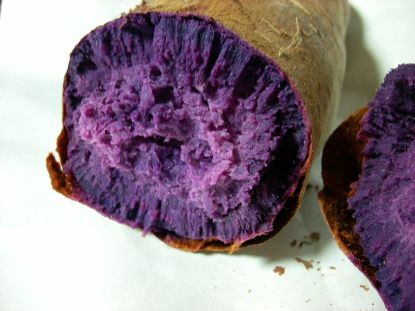
In Japan, schools often take their class trip to Okinawa, a subtropical island a stone's throw from Taiwan.  One of the better known vegetables from Okinawa is purple sweet potatoes, known as beni-imo or murasaki-imo in Japanese.  I found them at the market today so they're officially in season!  Purple sweet potatoes are awesome because they're bright purple.  How many natural foods can claim that?  They have a milder taste than orange sweet potatoes but can be used in all the same ways.  I've even made purple sweet potato pie from these potatoes which made the pie look like it was radioactively glowing.  Kick ass!

Outside of Japan, I have heard more and more markets are carrying purple sweet potatoes.  So take a look around or ask your local farmers at the farmers' market.  Maybe if you pique their interest enough they'll look into growing them!

How to Prepare
Same way you would any potato:

Easy Beni-imo Recipe
When your star ingredient is such a cool color, you want a way to showcase it!

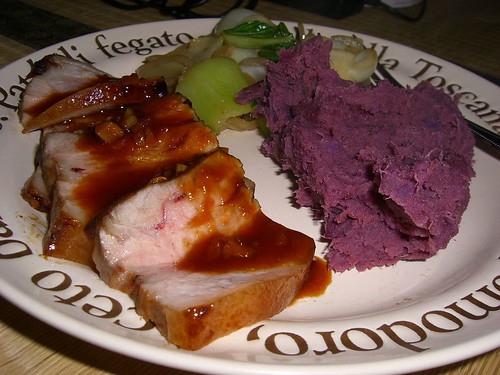
Jazzed Up Mashed Sweet Potatoes

Serves 2-3

Prep Time: About 30 mins

Ingredients:
  • 2 large purple sweet potatoes, either roasted in the oven or cooked in the microwave
  • 2 tablespoons butter or olive oil
  • 1/4 cup milk
  • 1/2 teaspoon salt
  • 1/4 teaspoon togarashi
  • 1/4 teaspoon cinnamon
  • 1/2 teaspoon finely grated lime zest
  • 1.5 tablespoons lime juice
  • 1/4 cup chopped fresh cilantro OPTIONAL
Preparation:
1. Cut open sweet potatoes and scoop out their innards into a bowl.
2. Add rest of the ingredients.  Mash together until well blended.
3. Serve!

I really like these potatoes with some pork chops or chicken that has been marinated in some sort of cumin marinade.


Wednesday, December 9, 2009

Kabosu かぼす


Continuing with the citrus theme, let's take a look at kabosu.  Kabosu is grown widely in Oita prefecture but more of an oddity up here in Shiga.  Kabosu is considered a sour orange and has a taste similar to limes and shikwasa.  The lighter in color the kabosu becomes, the sweeter it will taste, but when cooking you want it on the sour side so don't let them become too yellow.  If you can't find kabosu where you are (and if you're outside of Japan that's a good possibility) key limes make a good substitute.


How to Prepare
Just like any citrus, juice it and zest it!  Kabosu tends to have lots of small seeds so be prepared to fish them out of the juice.

Easy Kabosu Recipe
This recipe is about as easy as it gets!

Red Snapper with Chili Kabosu Butter


Serves 4

Prep Time: About 1 hour

Ingredients:

  • 1/4 stick (2 tablespoons) unsalted butter, softened
  • 1/2 tablespoon finely chopped shallot
  • 1/2 teaspoon finely grated fresh kabosu zest
  • 1 teaspoons fresh kabosu juice
  • 1/2 teaspoon minced fresh cayenne pepper or 1/4 teaspoon dried
  • 1/4 teaspoon salt
  • 1/4 teaspoon dried lemongrass or fresh lemon balm OPTIONAL
  • 4 pieces snapper fillets with skin
  • 1/2 teaspoon salt
  • 1/2 teaspoon black pepper
  • 1 1/2 tablespoons vegetable oil
Preparation:
1. Stir together butter, shallot, zest, kabosu juice, chile, salt, and lemongrass in a bowl.
2. Score skin of fish in 3 or 4 places with a thin sharp knife to prevent fish from curling (do not cut through flesh)3. Pat fish dry and sprinkle with salt.
4. Heat oil in a skillet over moderately high heat until just smoking, then sauté fish, turning over once with a spatula, until golden and just cooked through, 4 to 5 minutes, and transfer to a plate.
5. Serve each piece of fish with a dollop of chile lime butter.
6. Finished!

Serve this fish with a side of rice and some steamed veggies for a quick weekday dinner!
If you can't find snapper, any firm white fish will suffice.  Cod is a good choice here in Japan but be sure to thoroughly rinse the fish before cooking as it's usually heavily salted.

Tuesday, December 8, 2009

Daikon 大根


The giant white radish you find in so many dishes here in Japan.  Daikon can sometimes have a strong sulfury taste, particularly when raw, but when cooked most of that taste goes away.  Daikon is rich in vitamins A, C, and E, and supposedly helps cure hangovers.  I don't know if that last part is true, but next time you pull an all-nighter in Osaka eat a cup of shredded daikon in the morning and tell me how it goes.


When buying daikon, choose ones that are firm and on the smaller side.  Sometimes you'll find daikon that are lavender or bright pink in color.  I have no idea what the difference is between those and regular daikon other than their psychedelic tendencies.


How to Prepare
First you'll want to scrub the outside of the daikon to get rid of any dirt that's hanging out.  Chop off the top 2 inches of the daikon as that part is very tough and not worth eating.  Slice the daikon into large section and use a peeler or knife to take off the outer skin of the daikon.  Then soak the daikon in ice water to get it nice and crispy.  You can also just shred the daikon, dice it, etc at this point.

Easy Daikon Recipe
This is my own take on borscht, the Eastern European soup that usually incorporates beets.

Daikon Winter Soup

Serves 4
Prep Time: About 1 hour

Ingredients:

  • 1 tablespoon olive oil
  • 1 tablespoon butter
  • 1/2 cup chopped leeks
  • 1 teaspoon minced garlic
  • about 1/2 of a small daikon, peeled and shredded
  • 1 cup chopped celery
  • 1/2 cup grated carrot
  • 1 cup diced beef
  • 1 teaspoon sugar
  • 2 tablespoons red wine vinegar
  • 1/2 can diced tomatoes
  • 1 teaspoon salt
  • 5 small potatoes, diced
  • 4 cups beef broth
  • 1/4 head of cabbage, shredded
  • sour cream for garnish
Preparation:
1. Heat oil and butter in a saucepan.  Add leek and garlic.  Saute for about 5 minutes.
2. Add vegetables except cabbage, sugar, vinegar, tomatoes, beef and salt.
3. Cover and simmer about 30 minutes.
4. At the same time, add potatoes, water, and boullion to the soup pot.  Bring to a boil and simmer until the potatoes are just tender.
5. Add cabbage and vegetables from the saucepan.
6. Bring to a boil, reduce heat, and simmer 20-30 minutes.
7. Season to taste with salt and pepper.
8. Serve garnished with sour cream.
9. Finished!

Wednesday, November 25, 2009

Kuri 栗


American chestnuts may be all but extinct, but chestnuts are alive and well in Asia.  You often find chestnuts in sweet and savory dishes this time of year and they probably remind your grandma of Christmas and the Rat Pack.  Roasted chestnuts have a slightly sweet and nutty flavor that lends itself well to soups, pastas, rice, and desserts.  Unlike other nuts, chestnuts are low in fat and are very similar in nutritional makeup to brown rice.  Maybe that's why chestnut rice is so popular here in the fall.

How to Prepare
The easiest way to deal with chestnuts is to buy a bag of them already roasted.  Every supermarket has them this time of year.  If you're Stateside, I've heard you can buy them at Trader Joe's.  If you decide to use fresh chestnuts, shell the nuts, cut them in half, and boil them until soft.  They won't have the same roasted taste but work just as well in soups and desserts.

Easy Chestnut Recipe
While chestnut soup is amazing, it can be time consuming for those not used to working with cream soups.  So instead I decided to post this delicious pasta dish.

Pasta with Chestnuts, Prosciutto, and Sage

Serves 4
Prep Time: About 30 minutes

Ingredients
  • 1/2 cup prosciutto, chopped 生ハム
  • 1 tablespoon extra-virgin olive oil
  • 1 small onion, finely chopped
  • 4 garlic cloves, minced
  • 2 tablespoons finely chopped fresh sage (can substitute 2tsp dried if your Heiwado doesn't stock fresh herbs)
  • 1 cup crumbled roasted chestnuts
  • 1 cup chopped mushrooms
  • 225 grams dried flat pasta such as fettuccine (you can find fettuccine at Amica or Belsie, among other places.  If you can't find, just use the biggest mm spaghetti available at your store)
  • 1 cup finely grated Parmigiano-Reggiano or 1/2 cup of the powdered Parmesan cheese.
  • 2 tablespoons unsalted butter
  • 1 tablespoon finely chopped fresh parsley
Preparation
1. Cook onion and mushrooms in olive oil, stirring frequently, until mushrooms are beginning to brown, 2 to 3 minutes.
2. Add garlic and 1 tablespoon sage and cook, stirring, 1 minute.
3. Stir in chestnuts and prosciutto, remove from heat.
4. Cook pasta until al dente.
5. Reserve 1 1/2 cups cooking water, then drain pasta in a colander and add veggie mixture in skillet.
6. Add 1 cup reserved cooking water along with cheese and butter and cook, tossing constantly, over high heat until pasta is well coated (add more reserved water if necessary), about 1 minute.
7. Add salt and pepper to taste and serve sprinkled with parsley and remaining tablespoon sage.
8. Finished!