
Konnyaku is a curious thing. Is it a
vegetable, an animal, an amorphous blog of atoms? Turns out it
actually is a plant, and an ugly one at that. I'd be curious to know
why the first human who ate it decided to even approach the thing.
Maybe he was starving and delirious in the jungle. Apparently it's
called konjak in English, but as I've never heard that word in my life,
I'm content to call it konnyaku. Konnyaku doesn't have much of a taste
and comes in a variety of shapes and sizes, all of them gelatinous in
nature. You can also get konnyaku that has been infused with such
things as mushrooms and cayenne pepper. My favorite is the spicy
konnyaku, particularly the noodle shaped one.
As far as nutrition goes, you know the cabbage diet? The one where
you eat lots and lots of cabbage because it has very little calories or
nutritional value so you can eat as much as you want? Konnyaku is
Japan's answer to the cabbage diet. It's fat free, contains next to
nothing in calories, and has lots of fiber. So it's a great filler
food but don't rely on it as your sole sustainance. Probably the
greatest thing about konnyaku is it's cheap, so you can throw it in to
just about any recipe to bulk it up without affecting its flavor.
Konnyaku comes packed usually in fish broth so you'll want to drain that. You can find varieties that are packed in water as well. Once it's drained it's ready to go! If you buy a big block you can cut it into any shape you want. Or you can buy ones shaped as noodles, balls, on a stick, if you can imagine it, konnyaku has been shaped into it. Konnyaku can be eaten hot or cold, stewed, steamed, boiled, frozen, just about any way you want.
Easy Konnyaku Recipe
My favorite way of eating konnyaku is in nabe, but you can also throw it into stir-fries and other dishes easily.
Pork and Konnyaku Miso Stir-fry
Makes 4 servings
Ingredients:
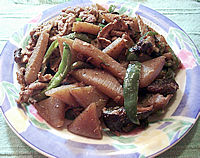
- 2 sheets of konnyaku, cut into triangles
- 150 grams pork, cut into 4 cm strips
- 1 tablespoon sesame oil
- 1 small pack shiitake mushrooms, destemmed and cut into halves
- 2 green peppers, cut into strips
- 1/2 onion, thinly sliced
- 2 cups cabbage, chopped
- 3 tablespoons cooking sake, divided
- 2 tablespoons soy sauce, divided
- 2 teaspoons sugar
- 1 teaspoons garlic, minced
- 1 teaspoons ginger paste
- 1 teaspoons togarashi
- 1 tablespoon water
- 30g miso paste 味噌
1. Mix together 2 tablespoons sake, 1 tablespoon soy sauce, miso paste, sugar and water. Add pork and konnyaku to the marinade. Allow to marinate for about 20 minutes.
2. In a frying pan, heat sesame oil over medium high. Add onions to frying pan. Saute until starting to become translucent.
3. Add green peppers, cabbage and mushrooms to frying pan. Saute for 3-4 minutes, or until green peppers being to soften.
4. Add garlic, ginger, togarashi, remaining sake and soy sauce. Saute for 1 minute or until fragrant.
5. Add pork, konnyaku, and sauce. Saute until pork has browned and sauce has begun to thicken.
6. Serve with rice.
7. Finished!


 Posts
Posts


