Sorry I haven't posted in ages! Things have been pretty hectic here with the end of the school year coming up. To make up for it I'll do two posts tonight :)
 Gobo is Japanese burdock and the big, dirt-covered root things you see
in the supermarket. It has a nice crunch and almost nutty flavor.
You'll often see it in school lunch and in Japanese restaraunts in
various forms. My personal favorite is fried gobo you will sometimes
find in izakayas. If you are lazy like me, you can find gobo that has
already been cleaned and julienned in bags near the bean sprouts and
bamboo shoots. But it's kind of expensive to buy it that way so it's
really better to buy it fresh and prepare it yourself.
Gobo is Japanese burdock and the big, dirt-covered root things you see
in the supermarket. It has a nice crunch and almost nutty flavor.
You'll often see it in school lunch and in Japanese restaraunts in
various forms. My personal favorite is fried gobo you will sometimes
find in izakayas. If you are lazy like me, you can find gobo that has
already been cleaned and julienned in bags near the bean sprouts and
bamboo shoots. But it's kind of expensive to buy it that way so it's
really better to buy it fresh and prepare it yourself. It's important to thoroughly clean
gobo before you use it. Scrub the gobo with hot water until you have
gotten most of the dirt off of it. Then you want to take a knife and
scrap off the outer skin of the gobo to remove any remaining dirt.
Usually gobo is cut into matchstick sized pieces but you can also chop,
dice, etc. It will just take longer to cook done that way.
It's important to thoroughly clean
gobo before you use it. Scrub the gobo with hot water until you have
gotten most of the dirt off of it. Then you want to take a knife and
scrap off the outer skin of the gobo to remove any remaining dirt.
Usually gobo is cut into matchstick sized pieces but you can also chop,
dice, etc. It will just take longer to cook done that way. After
you have cut your gobo up into matchstick sized pieces, it's important
to allow the gobo to soak in water for at least 10 minutes. If you
don't do this, the gobo will have an overwhelmingly strong taste. 10
minutes should do the trick but it's okay to allow it to soak for
longer.
After
you have cut your gobo up into matchstick sized pieces, it's important
to allow the gobo to soak in water for at least 10 minutes. If you
don't do this, the gobo will have an overwhelmingly strong taste. 10
minutes should do the trick but it's okay to allow it to soak for
longer.Easy Gobo Recipe
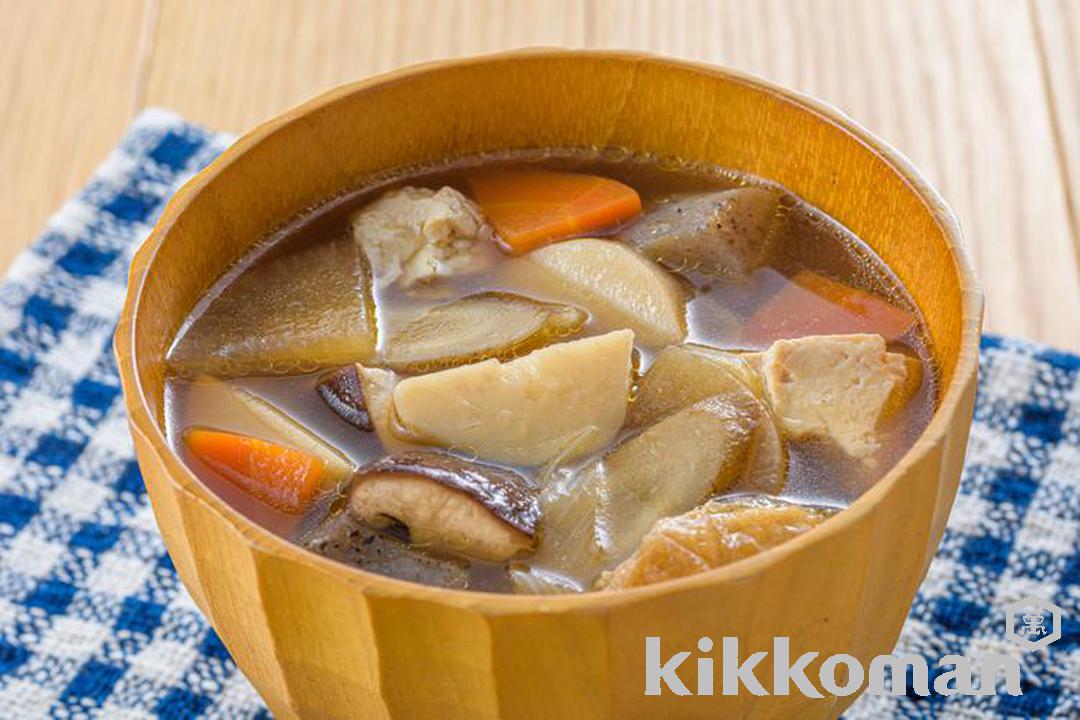
There are tons of ways to use gobo, though you will usually find it in soups, stir-fries, and Japanese-style salads. Here is a simple vegetable soup that can be made with gobo. From start to finish, this soup takes about 25 minutes to prepare.
Kenchin Soup
Makes 4 servings
Ingredients:
- 1 block tofu
- 6cm length of daikon radish
- 1/2 a carrot
- 3 shiitake mushrooms
- 1/3 stalk gobo
- 1/2 block konnyaku こんにゃく
- 1 sheet fried tofu 油揚げ
- 3 taro roots 里芋 (can substitute baby sized potatoes)
- 1/2 bundle Japanese mustard spinach 小松菜
- 2 tablespoons oil
- 2 teaspoons dashi (fish stock)
- 1.5 tablespoons soy sauce
- 1/2 teaspoon salt
- 2 tablespoons sake
1. Drain water from the tofu.
2. Cut daikon and carrot into thin half moon shaped slices.
3. Destem the mushrooms and cut caps into quarters.
4. Cut gobo into thin, round slices and place in water for 10 minutes. Drain water.
5. Peel the skin from the taro roots, salt the outside of the taro, allow to sit for a minute and then wash the taro.
6. Cut the konnyaku into large bite-sized pieces. Wash thoroughly.
7. Place the fried tofu into boiling water until most of the oil has been removed from the tofu. Remove from the water and cut into bite-sized pieces.
8. Heat oil in the soup pot over medium-high. Add daikon, carrots, mushrooms, gobo, taro, konnyaku, and fried tofu to the pot. Stir fry for about two minutes.
9. Add dashi and water to the pot. Bring to a boil, then lower heat so the water is simmering. Skim the top of the soup once every couple of minutes to remove any scum that rises to the top.
10. While soup is simmering, cut the drained tofu into 4cm blocks. Separate out the bunch of Japanese mustard spinach.
11. Add tofu and spinach to the pot. Add soy sauce, salt, and pepper to the pot.
12. Remove pot from heat once tofu has heated through.
13. Finished!


 Posts
Posts


